

There is a particular kind of clarity that emerges from catastrophe. When the structures that governed economic life are swept away — by war, by regime change, by the collapse of a world order — capital does not disappear, it repositions. And in the repositioning, fortunes are made, preserved, or lost, depending on whether one understood, in advance, which direction the tectonic plates were moving.
For family offices, whose mandate is measured not in quarters but in generations. This is not an academic question, it is the central question of long-term stewardship.
The Post-War Playbook
The period following the Second World War remains the most instructive laboratory in modern financial history. The war had destroyed much property, caused investments to lose value, and driven top tax rates up dramatically, significantly reshaping both income and wealth distributions. And yet from that devastation came one of the longest periods of broadly shared prosperity the world has ever seen.
What made the difference was not the volume of capital injected into recovery, but the institutional environment that capital helped create. The conditions attached to Marshall Plan aid pushed European political economy in a direction that left its post-war “mixed economies” with more “market” and less “controls” in the mix. The victorious Allies established the United Nations and the Bretton Woods monetary system, international institutions designed to promote stability through free trade, managed exchange rates, and Keynesian economics.
For private capital, the message was clear: reconstruction is opportunity. West Germany saw industrial production double from 1950 to 1957, with gross national product growing at 9 or 10% per year, providing the engine for economic growth across all of Western Europe. Infrastructure, industrial equity, and recovering real estate markets became the defining asset classes of the era. The investors who benefited most were not those who predicted the boom’s precise contours, but those who maintained capital and patience through the uncertainty that preceded it.
History also offers a cautionary counterpoint. Nearly half of American private investments in Europe between the wars had been lost. The post-1945 generation of investors understood this, and approached reconstruction with discipline rather than speculation.
A Current Case Study: The Middle East
No account of today’s investment environment can avoid the ongoing volatility in the Middle East, however briefly it must be treated here. The humanitarian dimensions of this conflict are beyond the scope of a financial publication, and the political questions it raises are ones on which reasonable people hold deeply divergent views.
What history and current market analysis suggest about the investment implications is, at this stage, more contained than the headlines might imply, but not without meaningful tail risk. The reaction of equity and oil markets to the Middle East conflict thus far has been restrained, with many analysts maintaining a base case that recent oil price moves are likely temporary, with minimal lasting effects on inflation. Historically, the market impact of geopolitical conflicts has tended to be short-lived, with risk premia reversing over time.
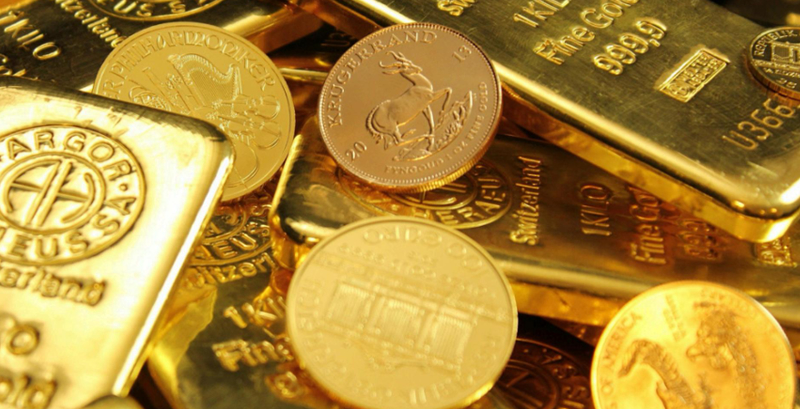
The critical variable is duration. The real risk lies in conflict spillover to the broader region or key transit routes like the Strait of Hormuz, the choke point through which around 20% of global crude oil passes. For family offices, the structural response being widely advocated – diversification into uncorrelated assets, gold, and infrastructure — maps almost exactly onto the lessons of post-war capital preservation.
How Family Offices Are Responding Now
Since mid-2024, family offices have re-oriented their investment strategies towards real estate. According to PwC’s 2025 Family Office Deals Study, real estate now constitutes 39% of portfolio allocations, its highest share since 2019, reflecting a preference for more stable options over riskier ventures. Gold’s role as a hedge against geopolitical disorder is as old as disorder itself, and appetite for it among family offices has grown markedly in the current environment.
Meanwhile, private markets and technology retain their forward-looking appeal. 39% of surveyed family offices plan to increase their private equity allocations over the next twelve months, according to Goldman Sachs’ 2025 Family Office Investment Insights report. And artificial intelligence occupies the position that post-war electrification and telecommunications once did; structurally transformative, and comparatively insulated from near-term geopolitical noise.
Through all of this, the defining characteristic of the most resilient family offices is consistency of purpose. Aware of the risks of trade war and geopolitical conflict, they are looking through 2025’s volatility and remaining true to their long-term investment objectives; adjusting beneath the surface rather than abandoning their strategic course.
What History Ultimately Suggests
If the emerging global regime produces a coherent multilateral framework, even one reconfigured around different poles of power, capital will adapt and find productive channels, as it did after 1945. If it produces instead a fragmented world of competing blocs and persistent friction, the pattern will resemble the interwar period more than the Golden Age: fitful growth, volatile flows, and a premium on defence.
The honest answer is that nobody knows which it will be. What history does tell us, with reasonable consistency, is that the families who preserve and grow wealth across geopolitical ruptures are rarely those who retreated entirely into safety, nor those who speculated recklessly into the chaos. They are those who understood, as the dust settled, where the new world needed to be built, and had the resources and the resolve to help build it.