
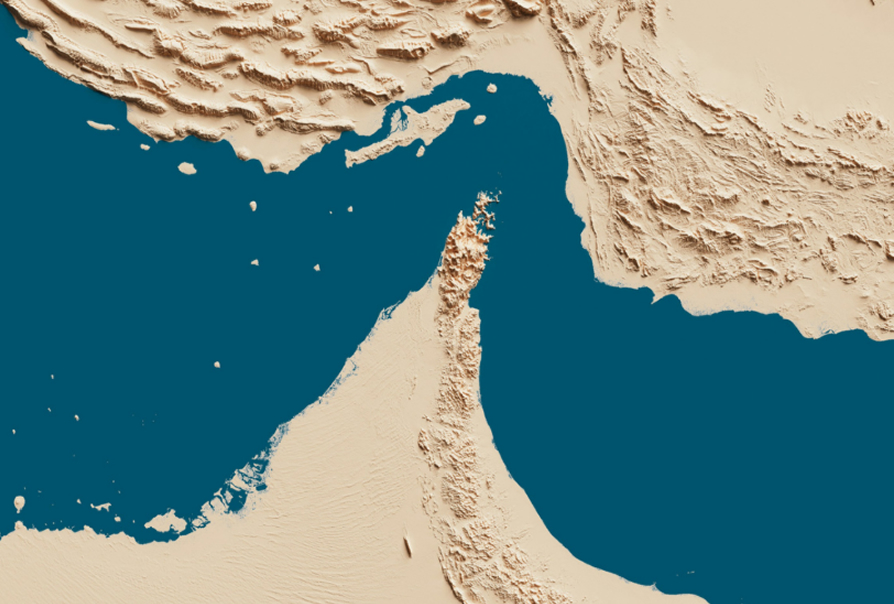
Saudi Arabia and the United Arab Emirates are expanding infrastructure that lets them export oil without sending tankers through the Strait of Hormuz.
The strait has been severely disrupted since the United States and Israel went to war with Iran on 28 February.
No joint Saudi-UAE project has been announced. Each country is building on routes that existed before the war.
Saudi Arabia pipes crude west across the country to the Red Sea. The UAE pipes crude east to the Gulf of Oman and is expanding its ports on that coast.
Why the strait matters
The Strait of Hormuz carried about 20 million barrels a day in 2024, according to UN data, roughly a fifth of the world’s oil. Before the war, around 125 vessels passed through each day. On 21 September, preliminary data recorded only two commercial vessels passing through, a figure that excludes ships with tracking transponders switched off.
Among the Gulf’s largest exporters, Saudi Arabia and the UAE have the most significant routes that avoid the strait. Iraq has a northern pipeline to Turkey’s Mediterranean coast, and Oman’s coastline lies largely outside Hormuz. Iran, Iraq, Kuwait, Qatar and Bahrain still depend on the strait for the vast majority of their exports.
Saudi Arabia: the East-West pipeline
Saudi Arabia’s main bypass is the East-West pipeline, also known as Petroline. It runs about 1,200km from the Abqaiq processing centre near the Gulf coast to the port of Yanbu on the Red Sea. The pipeline was built in the 1980s, during the Iran-Iraq war, and has been upgraded since.
Its capacity is usually given as 5 million barrels a day. Aramco temporarily raised this to 7 million in 2019 by converting some gas liquids lines to carry crude. In late March, Bloomberg reported, citing a person familiar with the matter, that the pipeline was pumping at that full 7 million-barrel rate.
In April and May, all of Saudi Arabia’s seaborne crude exports left from Yanbu, according to the ship-tracking firm Kpler. Riyadh is now considering adding 1 to 2 million barrels a day of capacity, according to people familiar with the discussions who spoke to Reuters and Kpler. Kpler’s sources say the expansion under discussion may involve a parallel pipeline for refined products rather than crude.
The UAE: pipelines and eastern ports
The UAE’s existing bypass is the Abu Dhabi Crude Oil Pipeline (ADCOP), which runs from the Habshan oilfields to Fujairah on the Gulf of Oman. It has a maximum capacity of about 1.8 million barrels a day.
The UAE is building a second pipeline to Fujairah, which will double the export capacity of the route. The government said in May that it was fast-tracking the project, and UAE officials said that month it was nearly 50% complete, with operation expected in 2027. Kpler judges mid-2027 the more likely start date, because the port at Fujairah must also be expanded. A third pipeline is also under consideration.
The UAE is also redirecting trade to three existing ports on its eastern coast: Dibba, Fujairah and Khor Fakkan. Feasibility studies are under way for at least one further harbour on the same coast. Road, rail and pipeline links are planned to connect these ports to the country’s oilfields and population centres.
Thani Al Zeyoudi, the UAE’s minister of foreign trade, told Bloomberg the country was moving towards zero dependency on Hormuz, whether or not the strait is open.
The eastern ports have already taken on far more traffic. Container volumes at Khor Fakkan rose roughly 25-fold after the war began, according to Reuters. Even so, the UAE still relies heavily on Jebel Ali and Khalifa Port inside the Gulf for imports. Moving LNG and aluminium exports away from the strait would also be harder than moving crude.
Limits and risks
The bypass routes cannot replace the strait. Before the war, the seven Gulf states exported about 23 million barrels a day. Goldman Sachs analysts estimate regional pipeline capacity could exceed 14 million barrels a day by the end of 2028 if the projects now planned or under construction go ahead.
The routes have also come under attack. An Iranian strike on a pumping station on the Saudi pipeline in April cut throughput by 700,000 barrels a day. On 13 September, drone attacks damaged pumping infrastructure and forced the pipeline to shut, halting loadings at Yanbu. Aramco restarted it at a reduced rate on 22 September, according to Reuters.
While the pipeline was shut, Saudi shipments through the strait itself rose sharply, averaging 2.9 million barrels a day in the six days to 18 September, according to JP Morgan. That compared with about 700,000 barrels a day in August.
Shipping from Yanbu faces its own threat. Since late July, Yemen’s Houthis have declared a maritime blockade of Saudi Arabia and have claimed attacks on Saudi tankers in the Red Sea, including off Yanbu. In early August, Aramco’s chief executive, Amin Nasser, said the attacks had had no material impact on the company’s capabilities.
The outlook for the strait itself is uncertain. On 22 September, a senior Iranian official told Reuters that Iran was prepared to reopen it within a week if the US eased military pressure and lifted its blockade of Iranian ports.