
There is a particular magic to watching a landscape change through a train window. Now, for the first time, that magic is possible across one of the most ancient and visually dramatic terrains on Earth. Dream of the Desert, Saudi Arabia’s first ultra-luxury train, is not simply a new way to travel. It is an entirely new way to encounter a kingdom.
A Train Born from Collaboration
Dream of the Desert is a genuinely ambitious project. Born from a partnership between the Italian luxury travel group Arsenale Group, Saudi Arabia Railways, the Ministry of Culture, and the Saudi Tourism Authority, it represents a meeting of European hospitality expertise and deep Saudi cultural investment, a combination that shows in every detail of the experience.
The train runs primarily between October and May (with a special summer edition in June and September), traversing routes that connect Riyadh northward through landscapes most international travellers have never seen and, until recently, had little means to reach. This is a country that has opened its doors to leisure tourism only in the past few years, and Dream of the Desert arrives at exactly the right moment, as the world’s curiosity about Saudi Arabia is at its highest, and the Kingdom’s own appetite to share its heritage is unmistakable.
The Train Itself: A Moving Palace
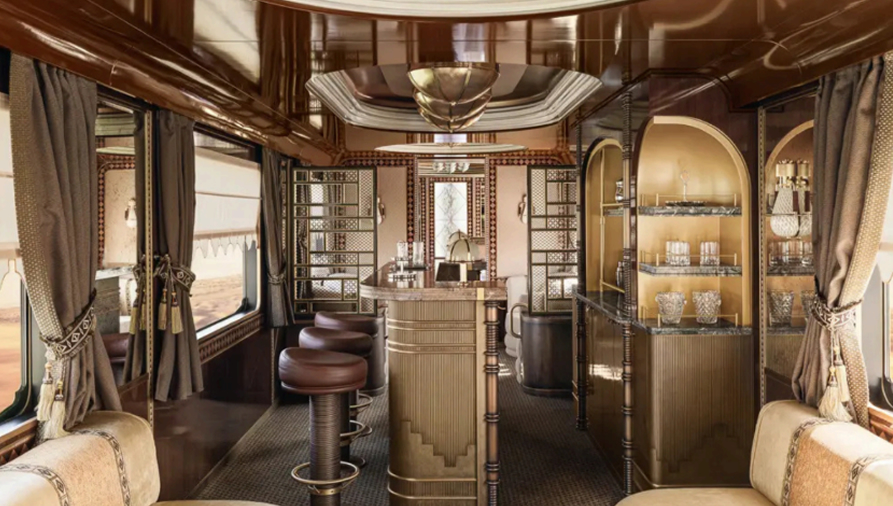
To board Dream of the Desert is to step inside what can only be described as a moving work of art. The interiors draw on the richest traditions of Saudi craftsmanship, with bespoke wooden marquetry, rich upholstery in warm desert tones, soft lighting that shifts with the mood of the day, while remaining thoroughly contemporary in their comfort. Details inspired by Saudi equestrian culture appear throughout: in the patterns of the textiles, in the carved motifs of the panelling, in a colour palette that evokes both the warmth of the desert at dusk and the cool blue of a clear Arabian sky.
The suite cabins are private sanctuaries, each one designed to make the journey feel unhurried, intimate, and quietly extraordinary. Dedicated butlers attend to guests around the clock. The reception lounges, inspired by the traditional Saudi majlis – the communal gathering space at the heart of Arabian hospitality culture – feature hand-carved wooden elements and woven textiles that create an atmosphere both welcoming and genuinely beautiful. References to the ancient sites of Hegra and Madain Salih appear in architectural details throughout, grounding the experience in the deep history of the land passing outside the window.
There is also an observation car designed expressly for watching the desert unfold, and live performances take place in the sophisticated lounge carriages as the landscape rolls by. This is travel as theatre, in the best possible sense.
The Table: Saudi Cuisine at Its Finest
The dining experience aboard Dream of the Desert is central to the journey rather than incidental to it. Local and international chefs have collaborated to create menus that celebrate the breadth of Saudi culinary tradition, an often under-celebrated cuisine, characterised by its generosity, its aromatic depth, and its deep roots in both Bedouin and Levantine cooking. Dining rooms inspired by the plaster motifs of central Saudi Arabia, with elegant wooden carvings and amber tones, create an environment that feels simultaneously grand and intimate. Gourmet lunches served amidst the dunes during desert excursions take the philosophy further: the food and the landscape become part of a single, continuous experience.
Five Itineraries, Five Ways to Know Arabia
What makes Dream of the Desert genuinely exciting is the range of what it offers. The flagship itinerary, The Northern Sands (three days, two nights, running October to May), takes guests from Riyadh through Al Jouf – where the ancient Marid Castle rises from a landscape of olive groves – and on to Jubbah, where prehistoric rock carvings etched into sandstone cliffs stand as some of the oldest art in human history. A morning desert experience and gourmet lunch among the dunes complete a journey that is as much about encountering deep time as it is about luxury.
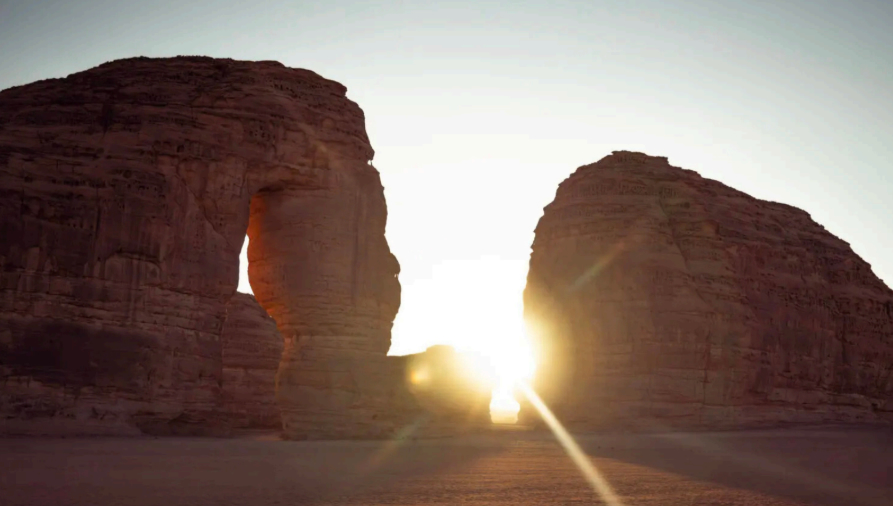
A Taste of AlUla extends the northern route further, culminating in the extraordinary destination of AlUla, a place of rose-sandstone formations, Nabataean tombs, and one of the most dramatic natural amphitheatres in the world. The journey includes a gala dinner in Al Jouf, a star-lit desert camp at Jubbah, and a private sunset transfer across golden dunes before arriving at a destination that has been called one of the world’s great undiscovered wonders.
Whispers of Jubbah offers a more intimate two-day adventure focused entirely on the prehistoric rock art at Jubbah, a historically significant site where ancient peoples carved images of animals, hunters, and dances into the rock face thousands of years ago. It is a journey into archaeology as much as landscape, followed by a desert camp experience before returning to Riyadh and the option of exploring Diriyah, the cradle of the Saudi state.
For those travelling during the holy month, Ramadan Nights is something genuinely special: an overnight journey from Riyadh to Qassim, structured entirely around the rhythms of Iftar and Suhoor, with exceptional food, a mesmerising stargazing stop in Qassim, and an atmosphere of warmth and communal celebration that captures something essential about Saudi culture. It is the kind of experience that no other travel format could offer.
Finally, the Summer Mirage itinerary (June and September) turns the conventional logic of desert travel on its head. Rather than fleeing the heat, it embraces it, the train departs Riyadh in the late afternoon and travels through the desert night, with world-class dining, themed events, and the surreal experience of watching the desert landscape pass under a summer moon. The harsh climate becomes, in this context, a kind of theatre.
Saudi Arabia: A Country Ready to Be Known
It is impossible to separate Dream of the Desert from the broader moment it inhabits. Saudi Arabia has long been one of the world’s most misunderstood countries, its extraordinary cultural and natural heritage overshadowed in Western imagination by geopolitical narratives. What Dream of the Desert offers is the experience of the country itself: its immensity, its silence, its archaeological riches, its hospitality, and its particular quality of beauty.
AlUla, Jubbah, Al Jouf and Diriyah are not tourist trappings. They are places of genuine historical significance, carrying within them layers of human civilization stretching back thousands of years. The rock art at Jubbah dates to the Neolithic period. The Nabataean tombs at Hegra, near AlUla, predate those at Petra. Marid Castle in Dumat al-Jandal, in Al Jouf, appears in pre-Islamic poetry. Dream of the Desert does not merely transport guests between these places, it creates the conditions in which they can actually be felt.
The Art of Slow Travel, Rediscovered
There is something quietly countercultural about a luxury train journey in an age of flights and frantic itineraries. To choose Dream of the Desert is to choose slowness, to accept that the space between destinations is itself part of the experience, that a window and a comfortable seat and the desert pouring past in golden silence is not dead time but perhaps the most valuable time of all.
Marco Polo called the Strait of Hormuz “the gem in the ring of the world”. He might have said something similar about this landscape, if he had had a butler, a glass of something cold, and the courtesy of moving at a speed that allowed him to actually see it.
Dream of the Desert is not just a new way to travel through Saudi Arabia. It is an invitation to reconsider what travel, at its best, is for.
Dream of the Desert operates multiple itineraries across the Saudi rail network. Priority list registration and further information are available at dreamofthedesert.com.