
It was the early 1980s, an era of Walkmans, neon trainers, and cassette mixtapes.
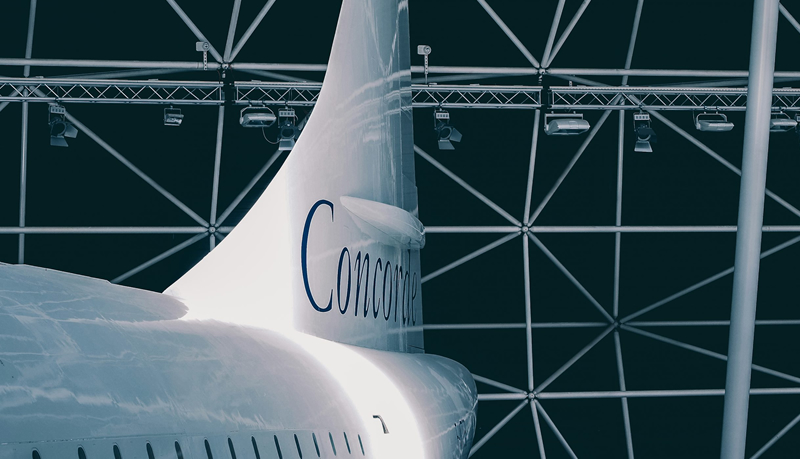
You’d arrive at London Heathrow or Paris Charles de Gaulle and catch that unmistakable glimpse of Concorde’s slender nose pointing confidently toward the sky. Inside, the cabin offered a calm, almost club-like atmosphere. Champagne flutes chimed softly while the latest hits from Michael Jackson, Madonna and George Michael drifted from televisions in the departure lounge. Then, in what felt like no more than the span of a long working lunch, you were already descending over the skyline of New York — a journey that normally consumed the better part of a day reduced to a dramatic gesture of technological ambition.
This was Concorde’s magic. It wasn’t simply that it was fast; it was that it gave business travellers the one luxury that no amount of money could buy elsewhere: time. In those days, crossing the Atlantic in just over three hours felt like the future arriving early. Today, that future might be returning.
Concorde took its last flight in 2003, and its retirement was announced due to a combination of rising maintenance and fuel costs alongside reduced passenger demand for travel following 9/11. A catastrophic crash in 2000 had also ruined its otherwise perfect safety record. The crash occurred due to a metallic strip falling onto the runway in Paris from a different plane, and bursting the Concorde’s tyre which then ruptured the plane, causing it to crash two minutes after take-off. The fatal outcome added to the pressure on Concorde and its ageing fleet, and it bowed out of the luxury travel market, apparently for good.
A new generation of supersonic flight — inspired directly by Concorde’s legacy but designed with modern technology, materials and regulations — is now aiming to re-enter commercial service before the end of the decade, with leading developers targeting 2029. The idea of travelling at more than twice the speed of sound is no longer a nostalgic throwback; it is steadily edging back toward the runway. While the initial network will focus on over-water routes like the North Atlantic, the implications for today’s business traveller are still profound.
A journey that once wiped out an entire working day could become a two- or three-hour hop again. Meetings in London followed by an evening engagement in New York could shift from logistical headache to realistic routine. For executives who frequently move between key transoceanic hubs, the return of supersonic travel offers the possibility of linking the world’s financial and creative capitals with unprecedented efficiency. The distances stay the same, but the workday begins to stretch in new directions.
What makes this moment different from the Concorde era is the technology driving it. Advances in aerodynamics, engine design and sustainable fuels promise greater efficiency and lower operating costs than were ever possible in the 1970s and ’80s. Regulatory frameworks in the United States and beyond have also begun to clear space for a new class of high-speed commercial aircraft, making the business case stronger than at any point since Concorde’s retirement in 2003.
There is still much to unfold — early routes, inaugural operators and pricing structures remain under discussion — but the energy around supersonic travel has undeniably returned. For corporate travel planners and senior executives, this represents not just a transportation upgrade but a strategic shift. In a global economy where speed, presence and timing increasingly define competitive advantage, cutting transcontinental travel times by more than half has the potential to reshape entire industries.
The romance of the Concorde era still lingers — that sense of boarding something rare, elegant and a little ahead of its time. But what is emerging now is more than nostalgia. It is the revival of an idea that always made sense: that the world’s busiest business travellers deserve an option that respects the value of their hours as much as their miles.
The age of ‘arrive before you left’ may soon be more than a memory. It may once again be a booking option.